Introduction
Flanges are critical components in industrial piping systems, providing leak-proof connections that must withstand pressure, temperature, and corrosive environments. For procurement engineers, selecting the right flange involves understanding standards, material specifications, and quality assurance. This guide outlines the key factors to consider when procuring flanges for your next project.
Standards to Confirm
Flanges must comply with international or industry-specific standards. The most common are:
- ASME B16.5: For flanges and flanged fittings up to NPS 24 (DN 600).
- ASME B16.47: For large-diameter flanges (NPS 26 to 60).
- EN 1092-1: European standard for flanges.
- JIS B2220: Japanese standard for steel pipe flanges.
Always verify which standard your project requires, including pressure class (e.g., 150, 300, 600) and facing type (e.g., raised face, flat face, ring joint).
Material Specifications
Material choice depends on the service fluid, temperature, and pressure. Common materials include:
- Carbon steel (ASTM A105): For general service.
- Stainless steel (ASTM A182 F304/F316): For corrosive environments.
- Alloy steel (ASTM A182 F11/F22): For high-temperature applications.
- Duplex / Super Duplex: For high-chloride environments.
Request material test certificates (MTCs) per EN 10204 3.1 or 3.2 to confirm composition and mechanical properties.
Inspection and Documentation
Before accepting a flange shipment, request the following:
- Mill Test Certificate (MTC)
- Dimensional Inspection Report
- Hardness Test Report
- Positive Material Identification (PMI) Report
- Visual and NDT reports (e.g., MPI, RT) as per your specification
Ensure markings on each flange match the documentation (standard, material, pressure rating, size).
RFQ Checklist
When sending a Request for Quotation (RFQ), include:
- Quantity and size (nominal pipe size and schedule)
- Standard and pressure class
- Flange type (weld neck, slip-on, blind, socket weld, threaded)
- Material grade and specification
- Facing and finish (raised face, flat face, serrated concentric, etc.)
- Coating requirements (e.g., zinc, epoxy)
- Certification requirements (3.1 vs. 3.2)
- Delivery timeline and destination
Providing clear details helps avoid misquotes and delays.
Common Quality Risks in Flange Procurement
- Dimensional non-conformance: Especially bolt hole alignment and gasket surface finish.
- Material mix-ups: Incoming material verification is critical.
- Heat treatment issues: Flanges for high-pressure service require proper heat treatment (e.g., annealing, normalizing).
- Counterfeit products: Use only reputable manufacturers like Hebei Haihao Group with traceability.
Why Hebei Haihao Group?
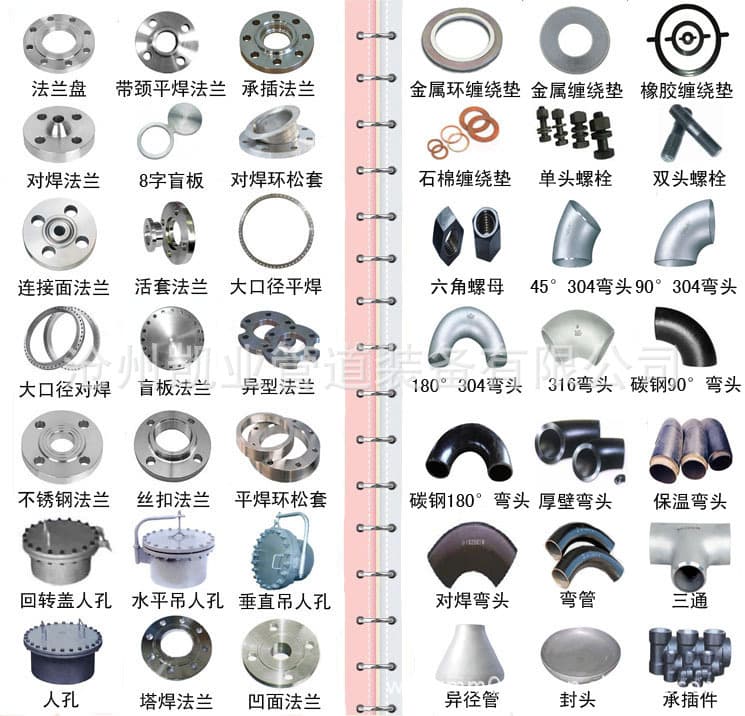
As a specialized manufacturer of flanges, pipe fittings, and piping packages, Hebei Haihao Group offers a broad product range from flat face to ring joint flanges, in carbon steel, stainless steel, and alloys. Their production follows ASME, EN, and JIS standards, with full material traceability and rigorous quality control.
Request a Quote
For your next flange procurement, send your RFQ with the details above to Hebei Haihao Group. Their technical team can assist with material selection and documentation requirements.
Need a quote for the products mentioned in this article?
Submit your specs and our pressure piping team will respond within one business day.
Send RFQQuote in 4 hours
Products covered in this article
Sourcing any of these? Send the spec and our pressure-piping desk replies within 4 business hours.
Related reading
 Buyer guide
Orifice Flange RFQ Checklist: B16.36 Details Buyers Often Miss
ASME B16.36 orifice flanges have unique requirements beyond B16.5. This guide covers scope, procurement checks, inspection points, and common risks to help EPC engineers and buyers specify correctly.
 Buyer guide
Hydrogen Piping Components: What an ASME B31.12 RFQ Must Define
ASME B31.12 governs hydrogen piping and pipelines. This guide explains what EPC engineers and procurement managers must specify in an RFQ for seamless pipes and socket-weld forged fittings, covering code parts, material verification, and inspection requirements.
 Buyer guide
Buttweld Spool Fit-Up: Coordinating ASME B16.9 Fittings and B16.25 Ends
Learn how to coordinate ASME B16.9 fittings with B16.25 bevel ends for reliable buttweld spool fit-up. Includes procurement checks, inspection points, and common risks.